Why Fudge Turns Grainy (and How to Fix It)
The science of sugar crystals in fudge: what causes grainy fudge, how to prevent it, and how to rescue a sandy batch by re-cooking it.
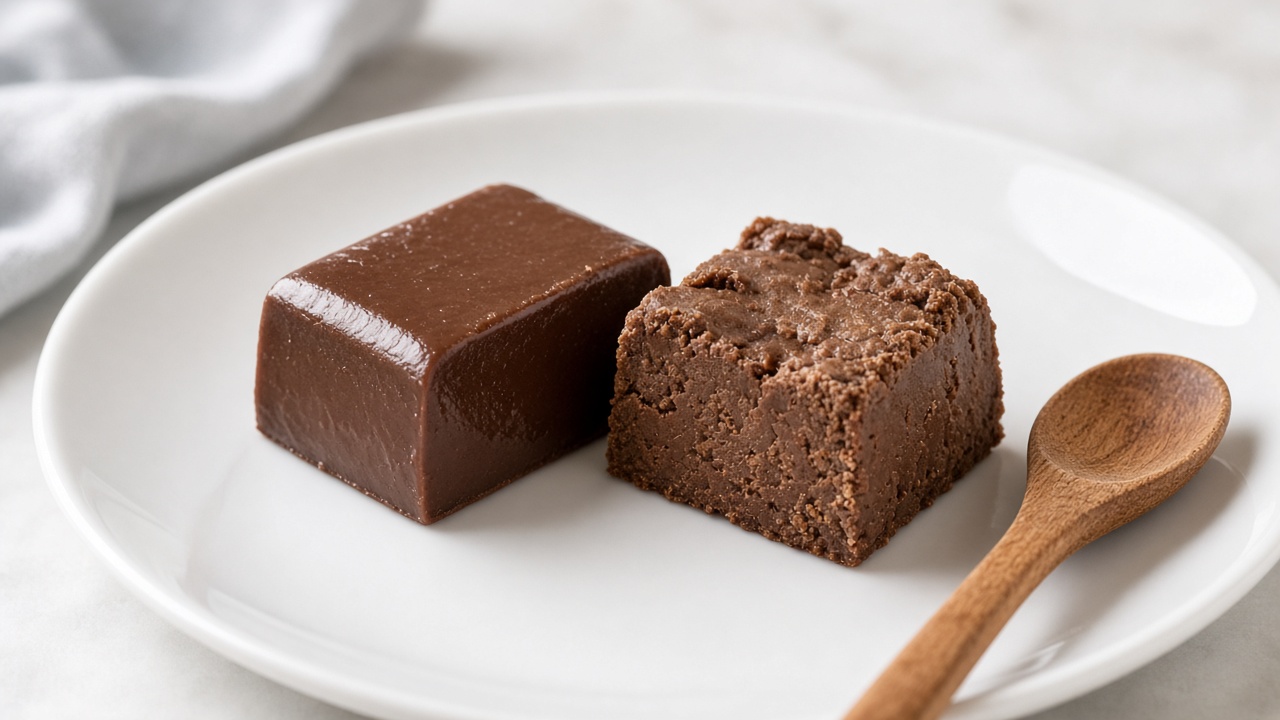
You followed the recipe. You watched the thermometer like a hawk. And yet your fudge has the texture of fine beach sand. Don't worry: grainy fudge is the single most common fudge problem, it has well-understood causes, and it can usually be rescued. Even future Pageant champions have scraped a sandy batch back into the pot.
The science in one paragraph
Fudge is a crystalline candy. When you boil sugar and milk to the soft-ball stage (234–237°F), you create a supersaturated syrup that holds more dissolved sugar than it normally could at room temperature. As it cools, that sugar wants to come out of solution as crystals. If crystallization starts all at once, in a cooled syrup that you're beating, you get millions of microscopic crystals and a creamy texture. If it starts early, around a few "seed" crystals, sugar keeps building onto those seeds and you get fewer, larger crystals your tongue can feel. That's graininess.
The usual suspects
- Undissolved sugar at the start. If sugar isn't fully dissolved before the mixture boils, the leftover granules act as seed crystals. Stir over moderate heat until the mixture is completely smooth before you let it boil.
- Crystals on the pan sides. Splashed syrup dries on the pan walls, crystallizes, and falls back in. Wash the sides down with a pastry brush dipped in water, or cover the pan for a couple of minutes once it boils so steam does the work.
- Stirring during the boil. Stirring a boiling syrup encourages crystals to form. Once it's boiling, leave it alone unless your recipe specifically says otherwise (some milk-heavy recipes call for occasional gentle stirring to prevent scorching).
- Beating too hot. This is the big one. Beat fudge at 200°F and you get fewer, larger crystals. Let it cool undisturbed to about 110°F (43°C) first.
- Jostling while it cools. Moving the pan, tapping the thermometer, or scraping the sides can trigger early crystallization. Set it somewhere safe and walk away.
- Scraping the pan. When you pour out the fudge, don't scrape the dregs from the pan sides and bottom into your batch. That residue is often crystallized already.
- Undercooking or overcooking. Undercooked fudge may not set and can turn sugary as it sits. Overcooked fudge sets too fast and can be crumbly and coarse.
- Humidity and a dirty spoon. A spoon with dried sugar on it is a seed-crystal delivery service. Use clean tools, and dry ones.
Prevention toolkit
- Add an interfering agent. A tablespoon or two of light corn syrup, or the butter and milk fat already in the recipe, gets between sucrose molecules and keeps crystals small. Some cooks add a little cream of tartar, an acid that turns some sucrose into glucose and fructose.
- Calibrate your thermometer so you hit the real target. See our thermometer guide.
- Use a heavy, clean pan with enough room for the mixture to foam.
- Be patient during cooling. 45–60 minutes is normal for an 8×8 batch to fall to 110°F. Our imaginary judges call this "the hardest hour in candy."
How to rescue grainy fudge
Because graininess is just sugar crystals, you can dissolve them and start over. As long as nothing is burnt, this works well.
🔧 Fix: re-cooking grainy fudge
- Scrape the fudge, set or not, back into a clean heavy saucepan.
- Add liquid: about 1/4 to 1/2 cup (60–120 ml) of milk or cream for an 8×8 batch. Use enough to dissolve it into a smooth syrup.
- Heat gently, stirring, until every bit of fudge and sugar has dissolved. There should be no grit.
- Wash down the pan sides with a wet pastry brush.
- Bring to a boil and cook without stirring back to 234–237°F (adjusted for your calibration).
- Remove from the heat. Optionally add another tablespoon of butter on top without stirring, then cool undisturbed to about 110°F.
- Beat until it loses its gloss, then pan it as usual.
Other fudge troubles
- Fudge that won't set: undercooked or under-beaten. Re-cook it the same way to the right temperature.
- Oily or greasy surface: the butterfat separated, often from overheating or too-rapid temperature changes. Re-melting with a splash of milk and beating again usually brings it back together.
- Hard and crumbly: overcooked or over-beaten. It's still delicious crumbled over ice cream, which Pageant contestants politely call "fudge crumble à la mode."
What about "easy" fudge?
Fudge made with sweetened condensed milk and chocolate chips isn't immune to texture trouble, but it rarely turns grainy, because the condensed milk's proteins and fats interfere with crystallization. If you're short on time or nerve, it's a perfectly respectable option. Just don't enter it in the Classic category in Springfield. Our fictional judges have very sharp tongues.
Ready to try again? Our classic chocolate fudge recipe builds in all of these safeguards.